Thoughts
DJ Shadow's original MPC has resurfaced — along with the floppy disks that helped create it.
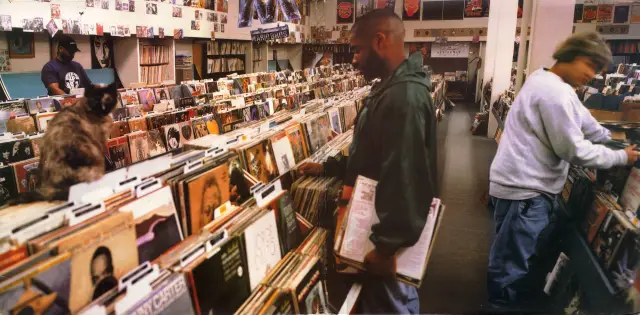
Thirty years ago this week, DJ Shadow released Endtroducing….
I still think it’s one of those incredibly rare records where I struggle to imagine changing anything without making it worse.
But its 30th anniversary has got me thinking less about whether it’s a masterpiece and more about what it must have felt like to actually make it.
Because we have the benefit of knowing what happened next.
Shadow didn’t.
Thirty years later
Endtroducing… was released in the UK on 16 September 1996. Shadow was 24. I was 21, it was the day after my birthday. He’d made it using a remarkably small amount of equipment: an Akai MPC60 II, a Technics SL-1200 turntable and an Alesis ADAT recorder.
Thirty years later, the record is being celebrated again for its anniversary.
And something else has happened which I find almost more interesting.
The MPC has resurfaced.
Shadow’s original MPC60 II has been refurbished, and with it have survived the floppy disks containing the programs, sequences and samples from that period.
It’s creative archaeology.
These weren’t museum pieces when Shadow made them. They were his working files.
Put a disk in. Load some samples. Chop something. Save it. Try something else.
Now we’re looking at the machine and those disks knowing that some of the decisions stored on them became one of the most celebrated sample-based records ever made.
That’s the advantage hindsight gives us.
We already know which bits matter.
The person making them doesn’t.
Did he know?
There’s a tendency to tell stories about creative work backwards.
Once something becomes important, everything involved in making it starts to look important too.
Experiments become innovations.
Limitations become principles.
Decisions become strategy.
The old equipment becomes historically significant.
But at the time, you’re just making something.
Shadow certainly wasn’t stumbling around without ambition. Making an entirely sample-based album was the mission. He’d spent years learning what he could do with records, four-track recording and then the MPC.
He was deliberately trying to push the form.
That’s different from knowing the result would endure for 30 years.
What does making a masterpiece feel like while you’re making it?
Presumably, for quite a lot of the time, it just feels like making something.
The paintbrush
There’s another person lurking behind this story.
Roger Linn.
Linn designed the original MPC with Akai. And there’s something he has said about the machine that completely changes how I think about creative tools.
When asked whether he’d expected the MPC to be used in the way hip-hop producers eventually used it, Linn said that some things were intentional. Loop recording, quantisation and swing were deliberately there to help musicians create.
But he hadn’t predicted people sampling loops.
The original MPC had only 13 seconds of sampling time.
Why?
Because Linn thought that was plenty for drum sounds. Memory was expensive, but more fundamentally, that was what he thought people were going to do with it.
Which raises a wonderful question.
Why on earth would anyone need more sample time?
Well, because they weren’t going to make what he thought they were going to make.
They wanted chunks of records.
Drum breaks.
Basslines.
Vocals.
Textures.
Entire phrases.
They wanted to chop them, rearrange them, pitch them and turn them into something else.
The tool escaped the intention of the person who designed it.
I’ve heard Linn describe his role beautifully: he makes the paintbrushes.
The artists decide what to paint.
Thirteen seconds
That limitation is particularly important when you listen to Endtroducing… now.
Shadow wasn’t sitting in front of a modern DAW with effectively unlimited audio tracks and storage.
The MPC60 had around 13 seconds of sampling time as standard.
Shadow has described having only about 2.5 seconds available for a stereo sample.
He worked around it.
For his earlier track In/Flux, he described using all the available sample time just for the beat, saving it to disk, bouncing it and then continuing to build. He estimated that one track used around 20 disks.
That’s not nostalgia for difficult technology.
I don’t think music becomes better because the equipment is annoying.
But limitations force decisions.
You can’t keep everything.
You have to decide which two seconds matter.
You have to chop.
You have to commit.
Shadow himself has said that the lack of memory meant he never had the luxury of taking extended samples.
It became about chopping.
The limitation became part of the technique.
More isn’t the same as better
This is where the story starts to feel particularly relevant now.
The computer I’m writing this on could run rings around the equipment used to make Endtroducing….
Modern production software gives us essentially unlimited tracks, enormous sample libraries, effects, synthesisers, pitch correction, time stretching, stem separation and tools Shadow couldn’t possibly have had in 1996.
My modern MPC can do things the MPC60 couldn’t dream of doing.
That’s progress.
I don’t want to go back to floppy disks.
But there’s a trap in assuming that increasing capability increases creativity at the same rate.
Shadow has talked about this himself. Years later, he warned about producers getting caught in what he called a “tech trap”: buying new equipment and reading manuals because it feels like progress, rather than actually making music.
Thirty years of technological progress haven’t given us a button labelled:
Make another Endtroducing….
The hard bit was never the amount of RAM.
It was deciding what to do with it.
Leo Fender
Roger Linn reminds me of Leo Fender.
I own two Fender Precision Basses.
The Precision first appeared in 1951. More than 70 years later, you can walk into a music shop, buy something fundamentally based on the same idea, take it into a studio and nobody has to make allowances for it because it’s an old design.
You plug it in.
It sounds like a bass.
And one of my favourite things about Leo Fender is that he wasn’t really a musician.
He was an engineer and electronics man making tools for musicians.
That’s fascinating.
He wasn’t a virtuoso bass player designing the ultimate instrument around his own technique.
He saw practical problems and solved them.
The double bass was enormous.
It was difficult to amplify.
Playing accurately on a fretless fingerboard required considerable technique.
So make it smaller.
Make it electric.
Give it frets.
Make it robust.
Make it work.
Then give it to musicians.
They’ll take it from there.
That’s Roger Linn’s paintbrush again.
The designer doesn’t necessarily need to know where the artist is going to take the tool.
Perhaps they shouldn’t.
Then Shadow gets the paintbrush
And that’s what makes Endtroducing… such a wonderful meeting point for these ideas.
Roger Linn helps create the MPC.
He has an idea of what it’s for.
Musicians immediately start pushing against that idea.
Hip-hop producers turn sampling itself into an art form.
Then this young producer in California gets hold of an MPC60 II.
Shadow has described how excited he was when he bought it. He went home, stayed up all night reading the manual and immediately started working because he’d been waiting for a machine that could do what was already in his head.
Then he starts pushing against its limitations too.
The machine doesn’t have enough sample time?
Chop harder.
Not enough space?
Save to disk.
Bounce it.
Reload.
Build another layer.
The machine wasn’t designed specifically to make Endtroducing….
It couldn’t possibly have been.
That’s the point.
Roger Linn made the paintbrush.
Shadow decided what to paint with it.
And now we’ve got the paintbrush back
Which brings me back to that restored MPC.
There’s something wonderful about seeing it again 30 years later.
The battered machine has become important because of what somebody did with it.
And the floppy disks make that particularly tangible.
The decisions survived.
Not in a retrospective documentary recreation.
Not somebody opening Ableton and showing us roughly how Midnight in a Perfect World works.
The actual working material survived.
There’s something almost absurd about that.
Imagine Shadow saving one of those disks in the mid-90s.
He’s not thinking:
I’d better label this carefully because someone may restore this machine for the 30th anniversary of my historically significant debut album.
He needs to save his work.
That’s it.
The historical significance comes later.
Hindsight makes everything look inevitable
This is what I find most interesting about creative genius.
Looking backwards makes everything appear much more deliberate than it probably felt going forwards.
Of course Roger Linn invented the MPC.
Of course hip-hop adopted it.
Of course Shadow made Endtroducing….
Of course it became important.
Except none of those things were inevitable.
The MPC could have remained a clever drum machine.
Producers could have moved on to something else.
Shadow could have made an album that disappeared.
Endtroducing… could have been respected in 1996 and forgotten by 2006.
Instead, here we are in 2026 restoring the machine it was made on.
That’s not something the person making the record gets to control.
You can have a strategy for making good work.
Learn your craft.
Understand your tools.
Develop taste.
Experiment.
Make decisions.
Throw things away.
Work around limitations.
Know when to stop.
But you can’t put this in the brief:
Make something people will still care about in 30 years.
That decision belongs to everyone who encounters it afterwards.
The people who buy it.
The people who sample it.
The people who make music because they heard it.
The people who keep playing it.
The people who decide, 30 years later, that the battered old sampler it was made on is worth restoring.
Roger Linn made the machine.
DJ Shadow made the record.
Neither of them got to decide what those things would eventually mean.
The creator gets to make the thing. Everybody else gets to decide what the thing becomes.